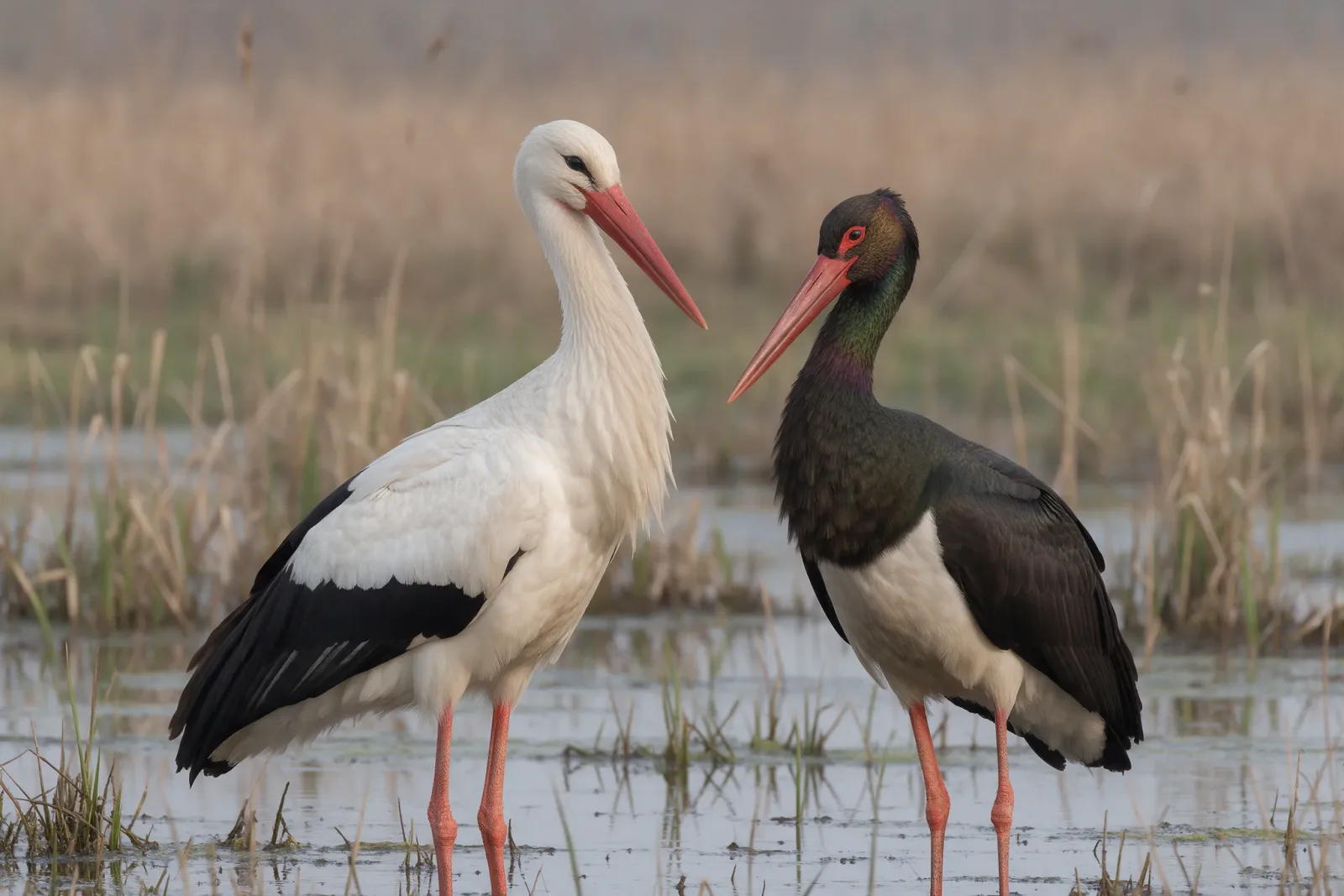
A stork is a bird of two worlds, the air and the shallows, and its legs are what make the second world possible. Those long red legs let a stork stand in water and wet grass for hours without a shiver, and its wide feet keep it from sinking into soft mud. The legs look thin and fragile. In truth they are one of the smartest parts of the whole bird, a piece of engineering that lets a stork do what it does best, and they deserve a closer look than most people give them. They are the reason a stork can stand where no other bird of its size can stand, and the reason it can wait with such complete stillness. The legs are the stork's ground, its steady base in a shifting world of water and mud.
Built for wading
Storks are wading birds, and wading birds are built on stilts. A stork's legs are long and bare, which lets the bird walk into water that would soak a shorter bird to the belly. The legs are scaly rather than feathered, so they dry quickly and do not hold water the way feathers would. A stork can stand in a flooded field or a slow stream for a long time, motionless, waiting for a frog or a fish to come close. The bare red legs are not a fashion choice. They are the difference between a bird that can hunt in water and one that cannot.
Feet that carry weight
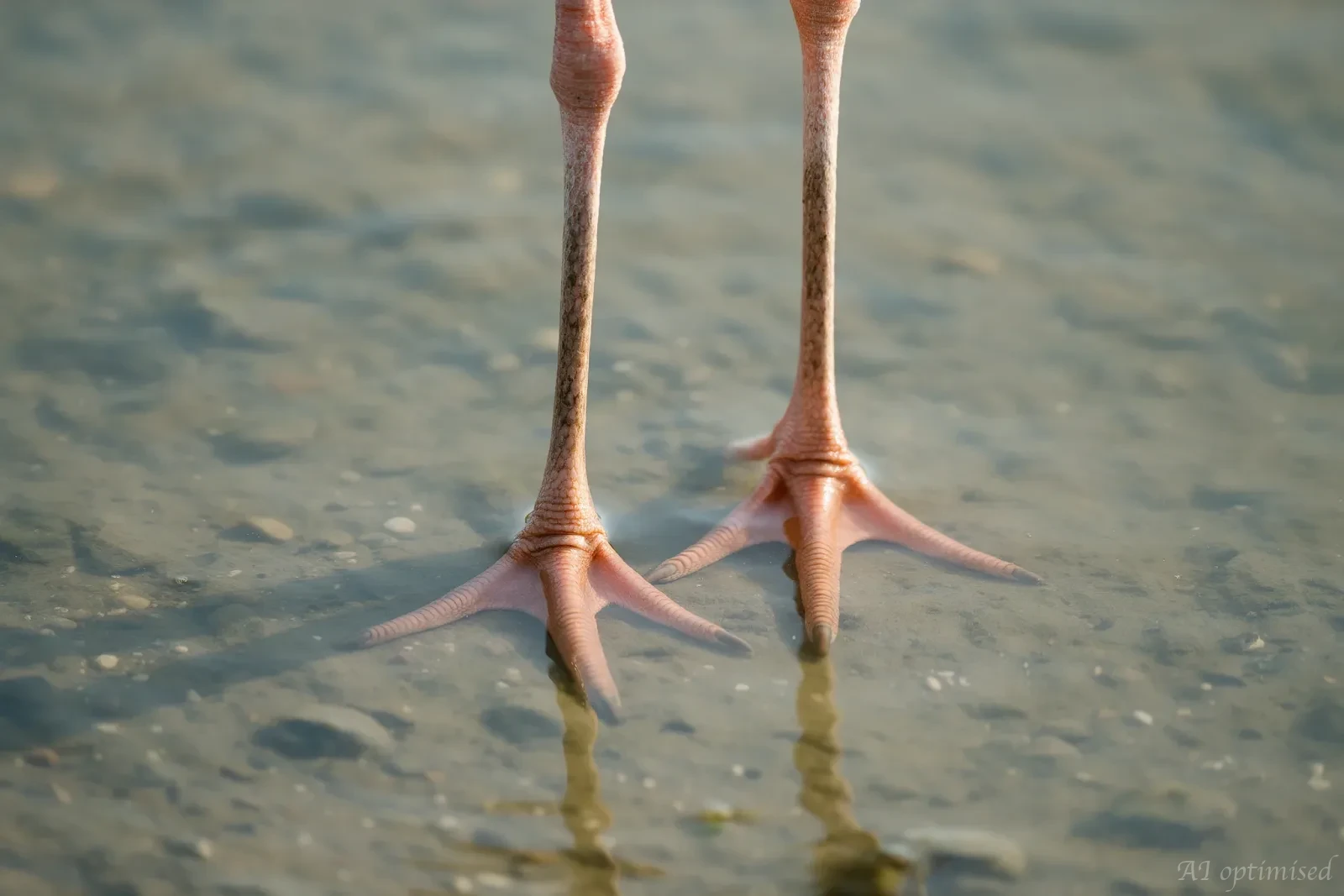
The feet are large and spread wide, which spreads the bird's weight over soft ground. On mud or a floating mat of reeds, a stork does not sink the way a heavy-footed animal would. The toes are long and strong, and the middle toes have a slight webbing between them at the base, enough to help on soft footing without turning the foot into a paddle. The stork is a walker, not a swimmer, and its feet are shaped exactly for that, wide enough to stand on mud and light enough to lift at a moment's notice.
Standing still as a strategy
Patience is a stork's hunting method. It stands in the water and lets the world grow used to it, so still that insects settle on the surface again and a frog forgets the bird is there. The legs make this possible. They lock at the joints so the bird can stand for long stretches without tiring, the way a heron does, resting on one leg and then the other. A stork can outwait its prey because its legs never grow tired, holding it steady in the water while the world below settles back to normal.
Legs for landing
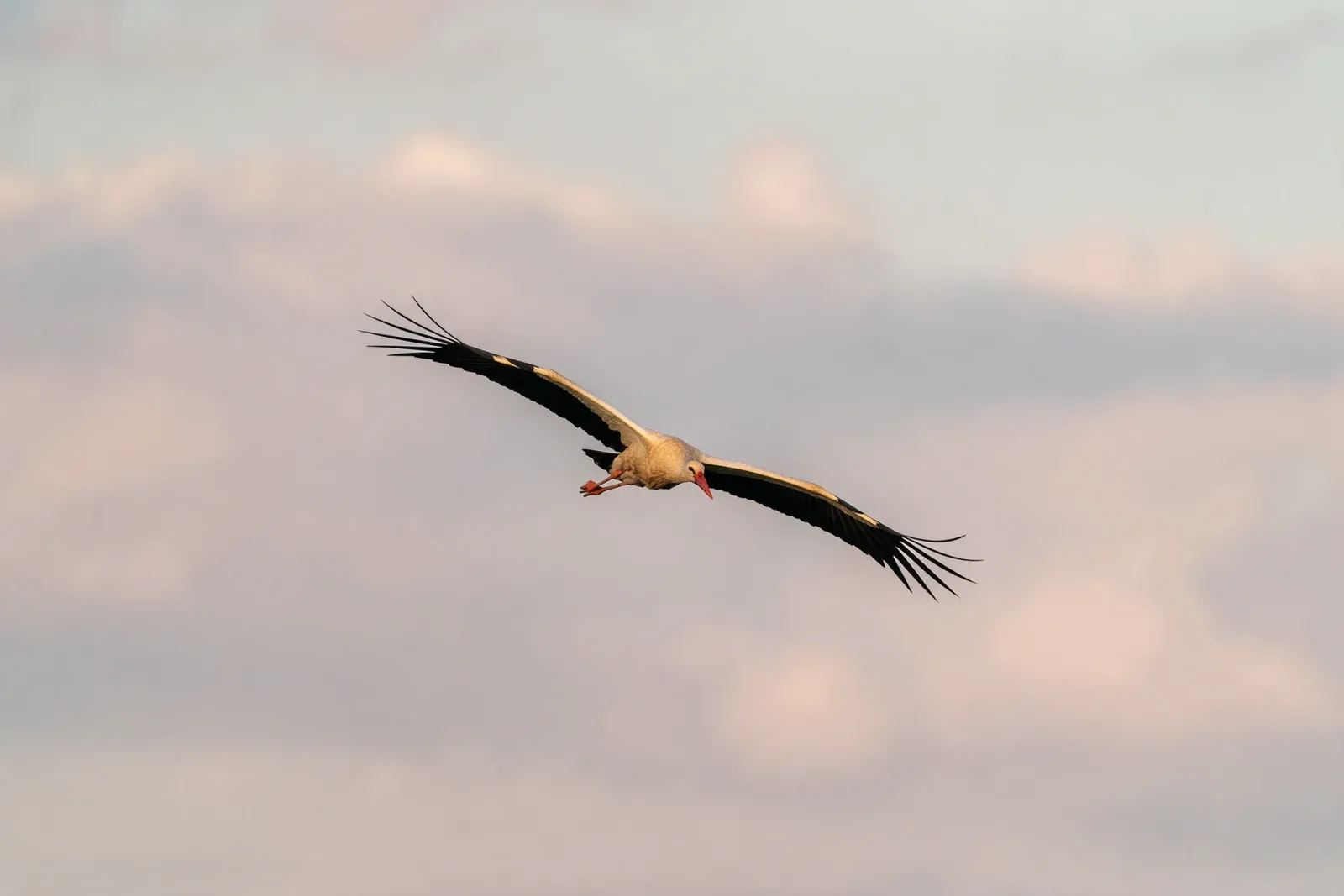
The same legs that wade also land the bird. A stork coming down to a nest on a chimney or a tall tree needs long legs to reach the nest edge and absorb the touchdown. It drops its legs as it comes in, feet reaching, and folds them up beneath it in flight to stay streamlined. In the air the legs trail behind like a thin red rudder, steering the bird as it comes in to land, and the red line of them is one of the signs by which a flying stork can be known at a distance. The red line of the legs is as much a part of the bird in flight as the spread of its wings, and it shows even when the bird is a mere speck against the sky.
A lifetime of standing
Think of how much of a stork's life is spent on those legs. It stands to feed, to rest, to sleep, to court, and to guard its nest. The legs carry it through water and over mud, and they fold away beneath it only when the bird is in the air. For a creature of such long journeys, the stork is also a creature of stillness, and its legs are what hold that stillness steady for hours at a time.
So the next time you see a stork standing ankle-deep in a meadow pool, remember what those legs are doing. They are holding a patient hunter still, keeping it dry and steady, and waiting for the water to give something up.
Explore the gift