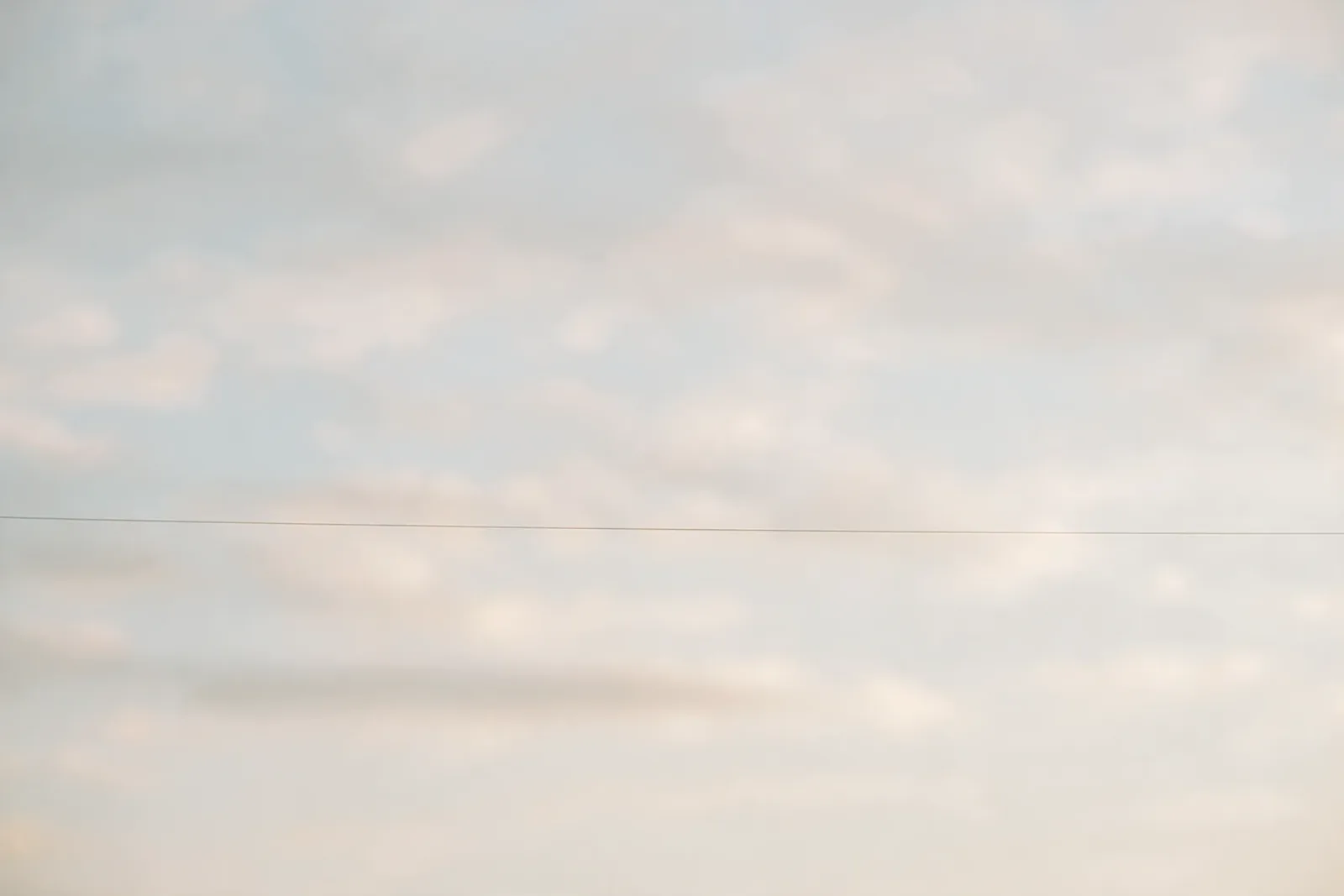
Power lines and wings are a meeting that almost never ends well, and for a long time almost no one was looking. A white stork in flight watches the ground, not the sky. A thin wire against a bright background is effectively invisible to it, and a bird with a wingspan of two metres needs room to turn. The collision, when it comes, is sudden and almost always fatal. This hazard has quietly undone a share of the stork's hard-won recovery.
Why the wire is invisible
The problem is partly the design of the line and partly the design of the bird. Storks are heavy birds for their size, built for gliding on thermals rather than for sudden dives or swerves. When they travel, they follow the same corridors year after year, and those corridors sometimes cross the routes our electricity follows.
The most dangerous stretches are the earth wires and the low, taut cables that a bird cannot see until it is too close. In poor light, in mist, or with the sun behind them, even the most careful observer would struggle. The stork has no chance to choose.
Marking the danger
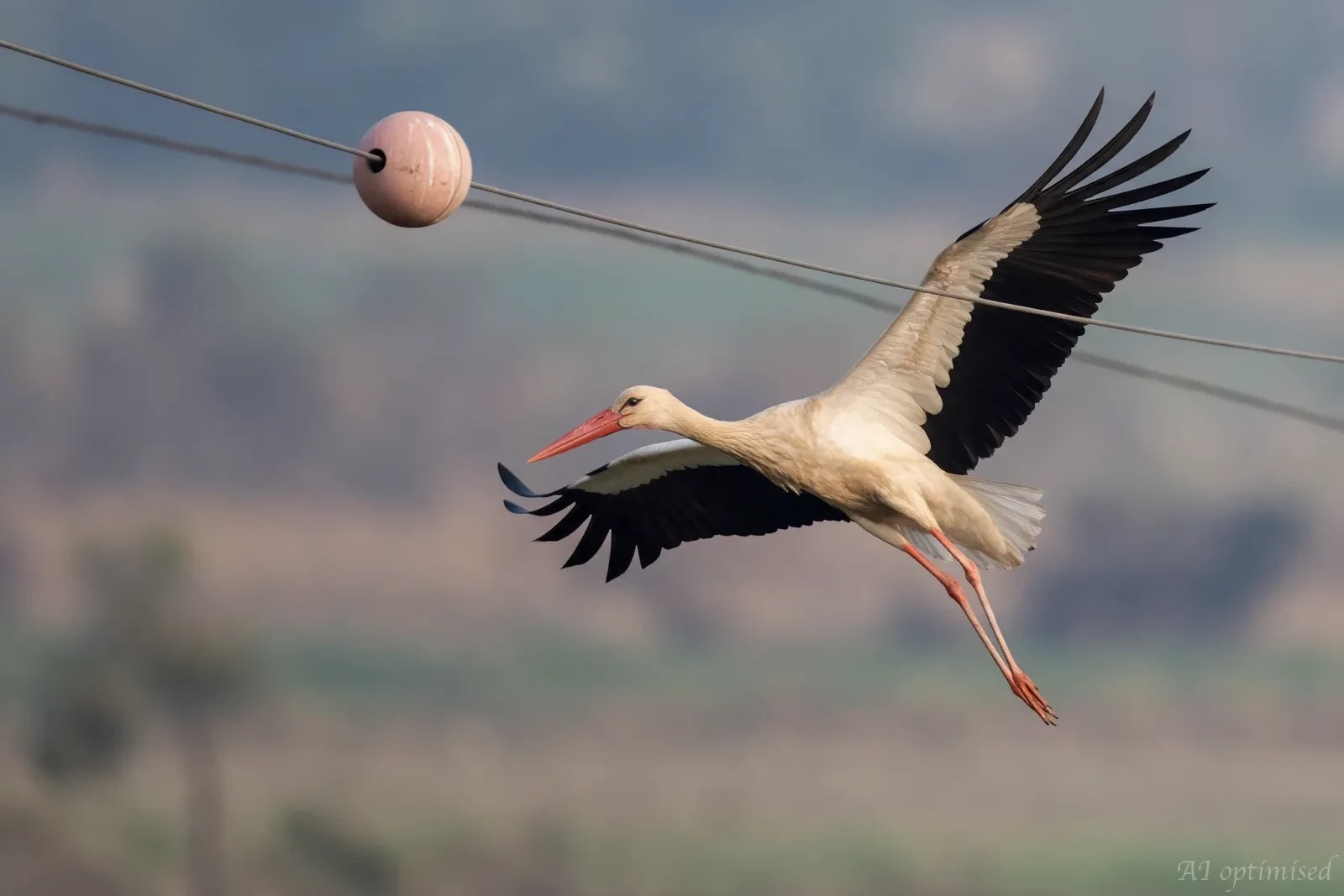
The quiet work of making lines safer is often as simple as a marker. Small spheres, spirals, and plates are fixed to the wires to make them catch the light and the eye. Once a line is visible, a stork can judge it, climb over it, or steer around it. The effect is immediate and well documented: marked lines kill far fewer birds than unmarked ones.
This work is not glamorous. It is a person in a harness on a pole, fixing a bright ball to a cable. But every marker is a crossing made safe, and every safe crossing is a bird that gets to finish its journey.
Moving the route
Sometimes the better answer is to move the line itself. When a new cable is planned, routing it away from known migration corridors, away from wetland feeding grounds and nest colonies, removes the risk at the source. Underground cabling, where it is practical, removes it entirely.
These choices cost more up front, but they are the cheapest kind of prevention in the end. A stork that survives its migration is a stork that returns to breed, and every breeding season is an investment the whole population draws on.
A hazard we chose
Power lines are not an act of nature. They are a choice, and because they are a choice, they can be changed. The electricity they carry has become essential to us; the risk they carry to birds is not. With markers, with routing, and with a little attention, the same line that was a wall across the sky can become something a stork simply steps over.
The work is slow, and it is far from finished. But every bright marker on a wire is a small refusal to let a bird's whole journey end against a string we hung in the air.
Explore the gift