Do storks drink? It is the kind of simple question a child asks, and the answer is simpler and gentler than most people expect. Yes, a stork drinks, and it does so the same way almost every bird does. But there is something about watching a stork lower that long red bill to the water that turns an ordinary act into a small piece of grace. The question is worth asking, because the answer opens a small window onto the whole of a stork's life. It is the kind of question that seems too small to matter and turns out to touch on everything: how the bird feeds, how it migrates, and how it has fitted itself to the water it needs. A simple act, followed far enough, becomes a portrait.
The simple answer
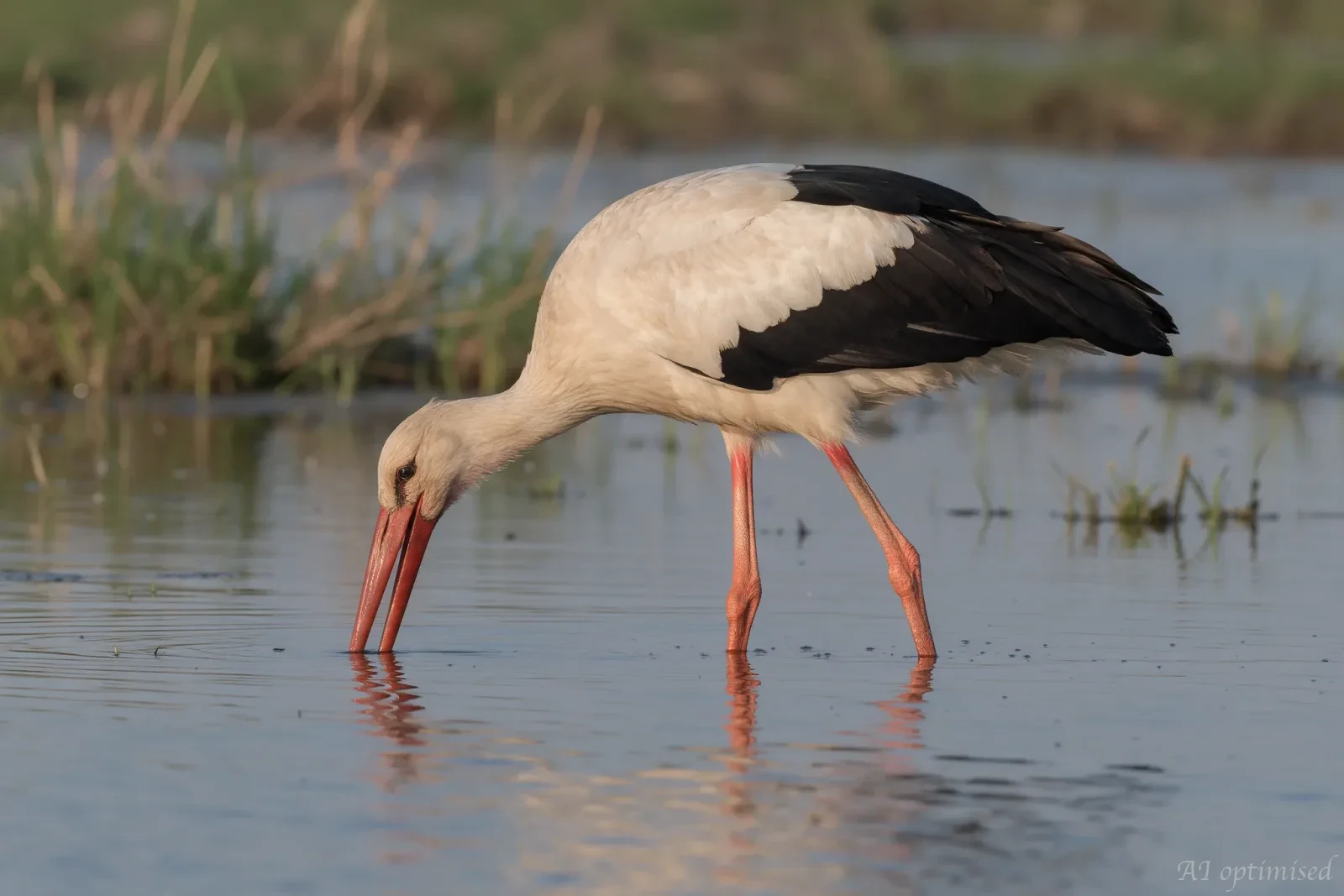
A stork needs water to live, just as any animal does. It gets some of that water from its food, from the frogs and insects and other moist prey it eats, but it also drinks directly. Like most birds, a stork scoops water into its bill and tips its head back to let the water run down its throat. The motion is quick and practised, and after a long flight or a hot day it is one of the first things a stork seeks out. Thirst is one of the oldest needs any animal has, and a stork answers it in the plainest way.
How the bill works as a cup
A stork's bill is not a straw. It cannot suck water up. Instead the bird dips the bill into the water, collects a little in the lower half, then raises its head so the water flows back into its throat. You can see the same trick in any garden bird at a puddle. The difference with a stork is the size of the instrument, a long red bill that makes the whole act look slow and deliberate. The same bill that snaps up a frog works just as well as a cup, and the bird uses it for both without thinking.
Why water matters on migration
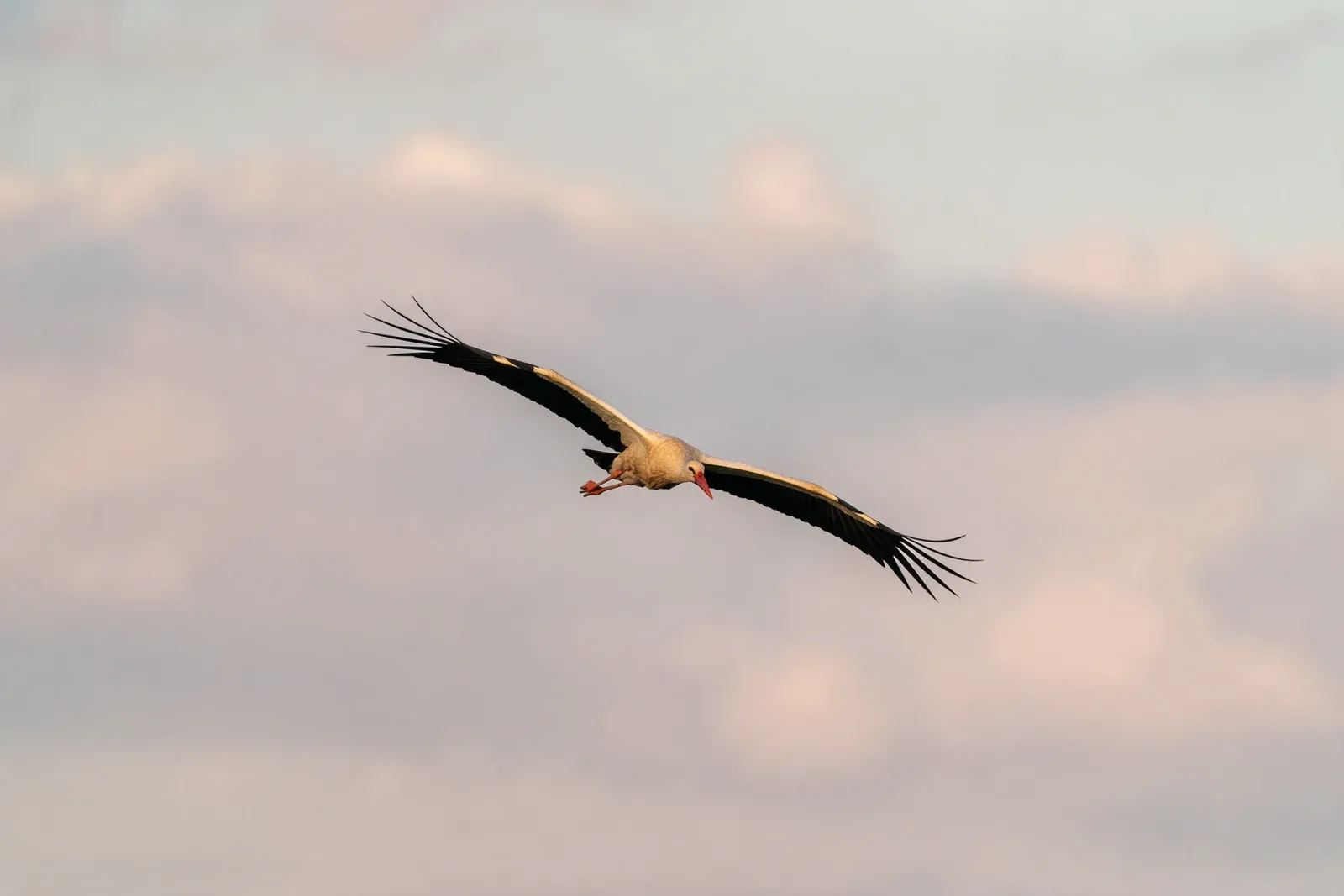
On a long migration, water is life. A stork flying south through dry country must find places to drink and rest, and the route it follows is shaped in part by where the water lies. Rivers, lakes, and even flooded fields become stopping points, and a stork will come down to drink and wade before pushing on. The map of a migration is, in a real sense, a map of water, and a stork cannot afford to fly far from the places where it can drink. Thirst shapes the route as much as the wind does.
Drinking and feeding together
For a stork, drinking and feeding often happen in the same place. It stands in the shallows, drinks a little, then returns to watching for prey. Water that is clean enough to drink is water where frogs and fish can live, so a drinking spot is usually a feeding spot too. The bird's whole day can be spent in one stretch of good water, moving between sips and small hunts, never far from what it needs. A good pool serves a stork twice over, as a well and as a larder.
The gentleness of the act
There is a reason the question of drinking seems gentler than the rest of a stork's life. The long red bill, so fierce-looking when it strikes, becomes something soft when it dips to the surface. The bird bows its head, takes the water, and lifts its bill to the sky, and the whole movement is patient and unhurried. A stork at the water's edge is a study in calm, and it is no wonder the image stays with people who have seen it. A stork drinking is a small proof that even the wildest birds live by the same gentle needs we do.
So the answer to the child's question is yes, and gently so. A stork drinks, in the same patient way it does everything else, lowering its red bill to the surface and lifting its head to let the water fall. It is a small act, easy to miss, and worth the watching.
Explore the gift