A walk through stork country is a walk through water, grass, and open sky. White storks gather where the land is flat, the ground is wet, and the view is long, places where a bird that feeds by sight can see its food and its dangers from far away. To walk such country is to learn to read a place the way a stork does, one wet field, one ditch, one rooftop at a time.
The wet meadow
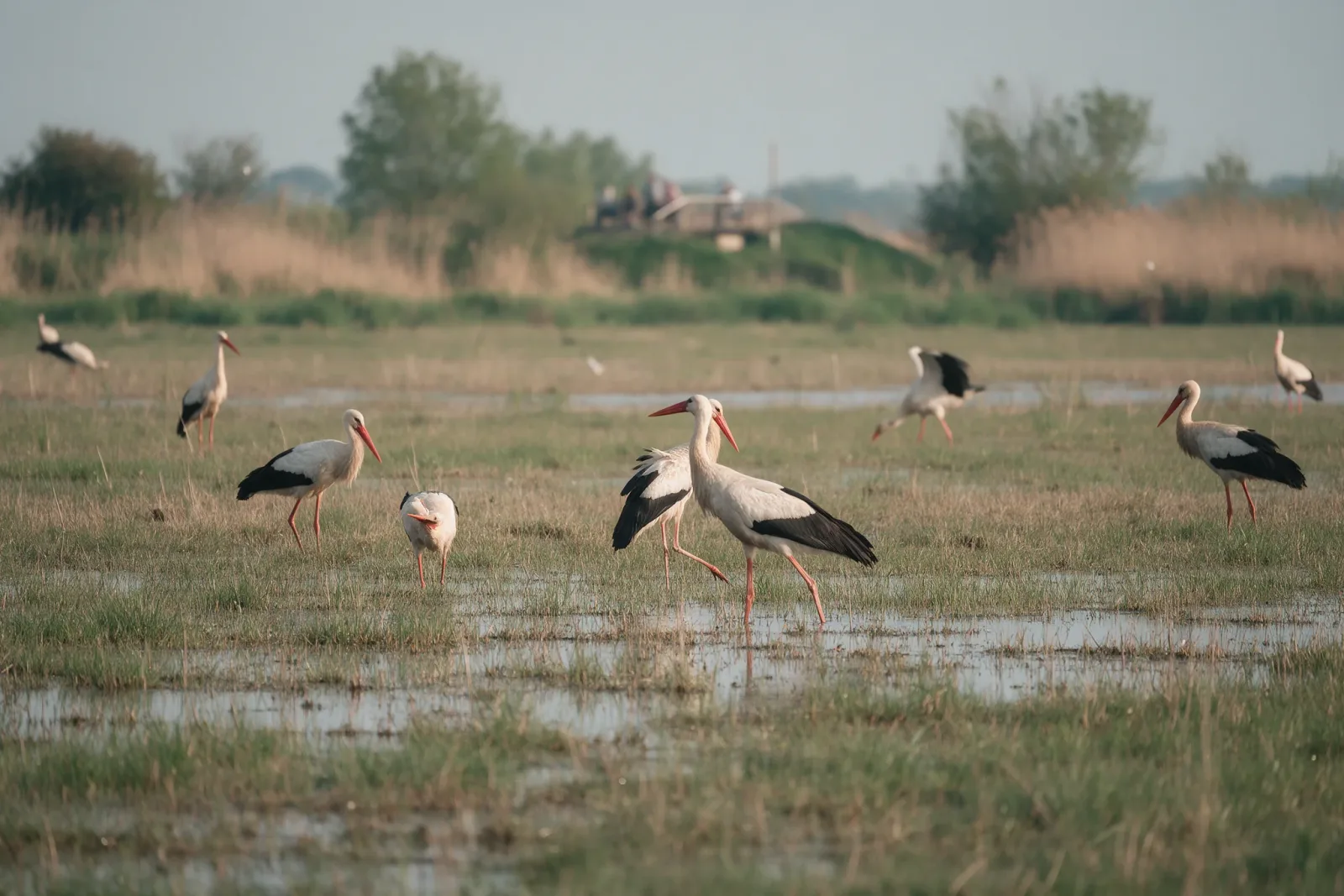
Begin with the wet meadow, the heart of stork country. Here the grass is short, the soil holds water, and the ground is full of frogs and insects. A stork walks these fields slowly, head down, taking its food from the very surface you are standing on. Walk the boundary rather than the middle, keep to the path, and the birds will go on feeding while you watch.
The ditches and the drains
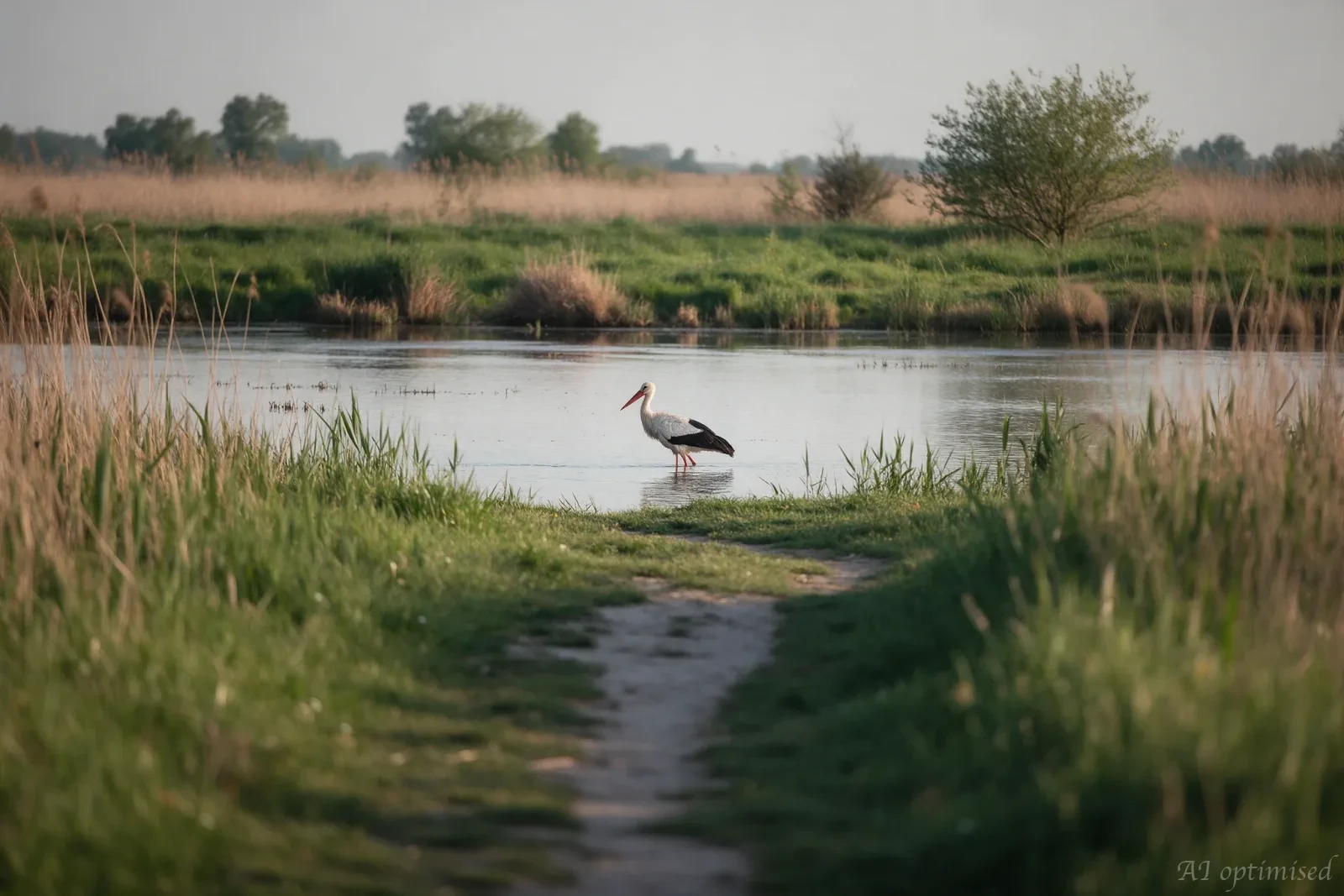
Stork country is threaded with water: ditches, drains, small canals, the damp verges that run alongside them. These thin lines of water are highways for a stork. Follow one on foot and you will likely find a bird working its edge, stepping from mud to grass and back again. The margins are where the small life gathers, and the stork knows it better than any watcher.
The floodplain and the fish pond
After rain, a flat pasture becomes a shallow pool, and within a day the storks arrive. Floodplains and the edges of fish ponds and reservoirs hold water at exactly the depth a stork likes, ankle deep, clear, and full of movement. These are the places to visit after a wet spell, when the ground is too soft for the tractors and the birds have the field to themselves.
The village and the chimney
Stork country is not all wild. Much of it is farmed, and much of it is lived in. The stork nests on the chimney, the church tower, the platform put up beside the village green, and it feeds in the fields that surround the houses. A walk that begins on a village street and ends at the edge of the marsh passes through the whole of a stork's world in an hour, from the nest where it sleeps to the field where it feeds.
Walking well in stork country
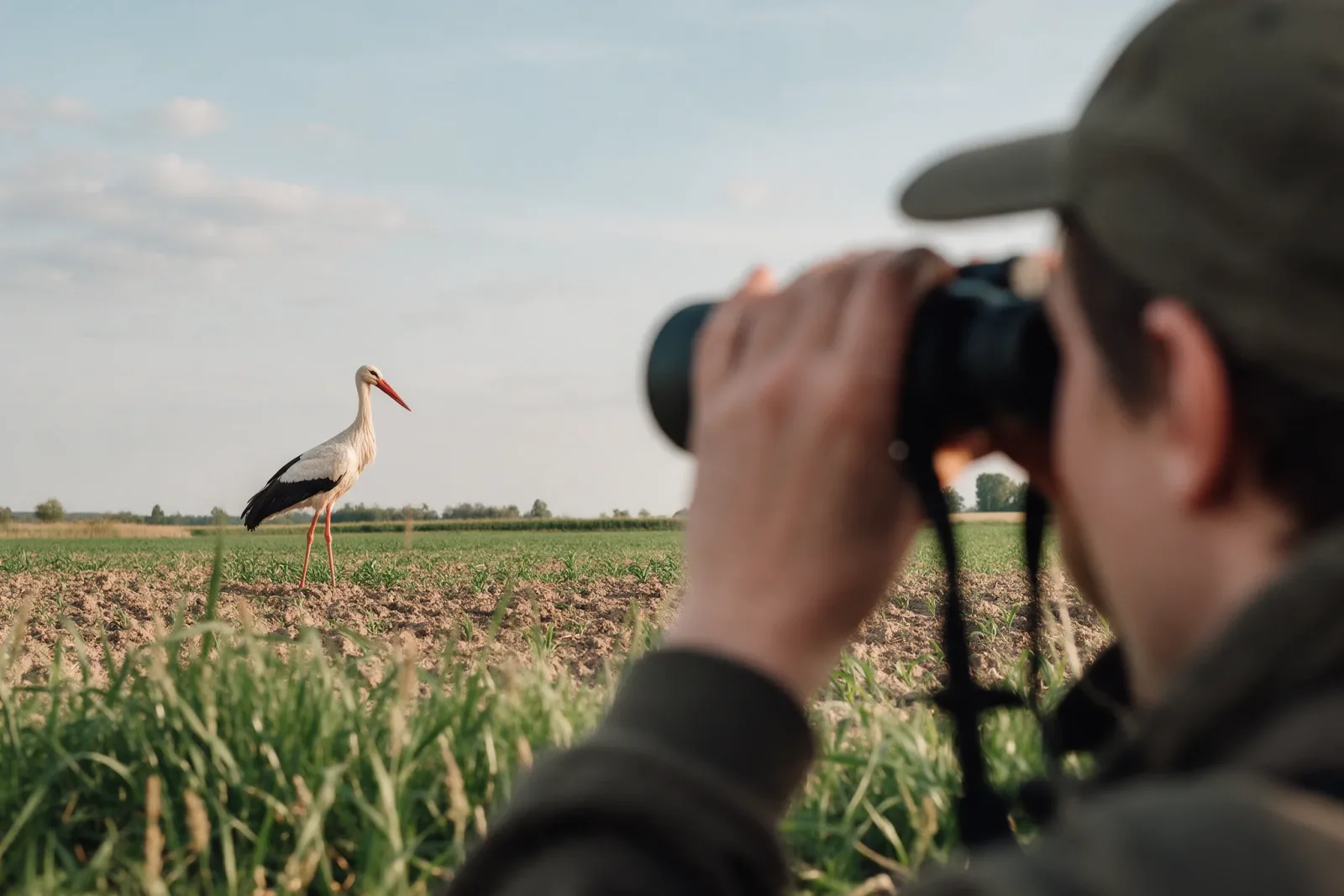
In stork country, how you walk matters as much as where. Move slowly, stop often, keep to paths and boundaries, and resist the urge to cross a field for a closer look. The stork will tolerate a quiet figure at the edge far longer than it will an approach. Walk as though the country belongs to the birds, because for most of the day, it does.
Explore the gift