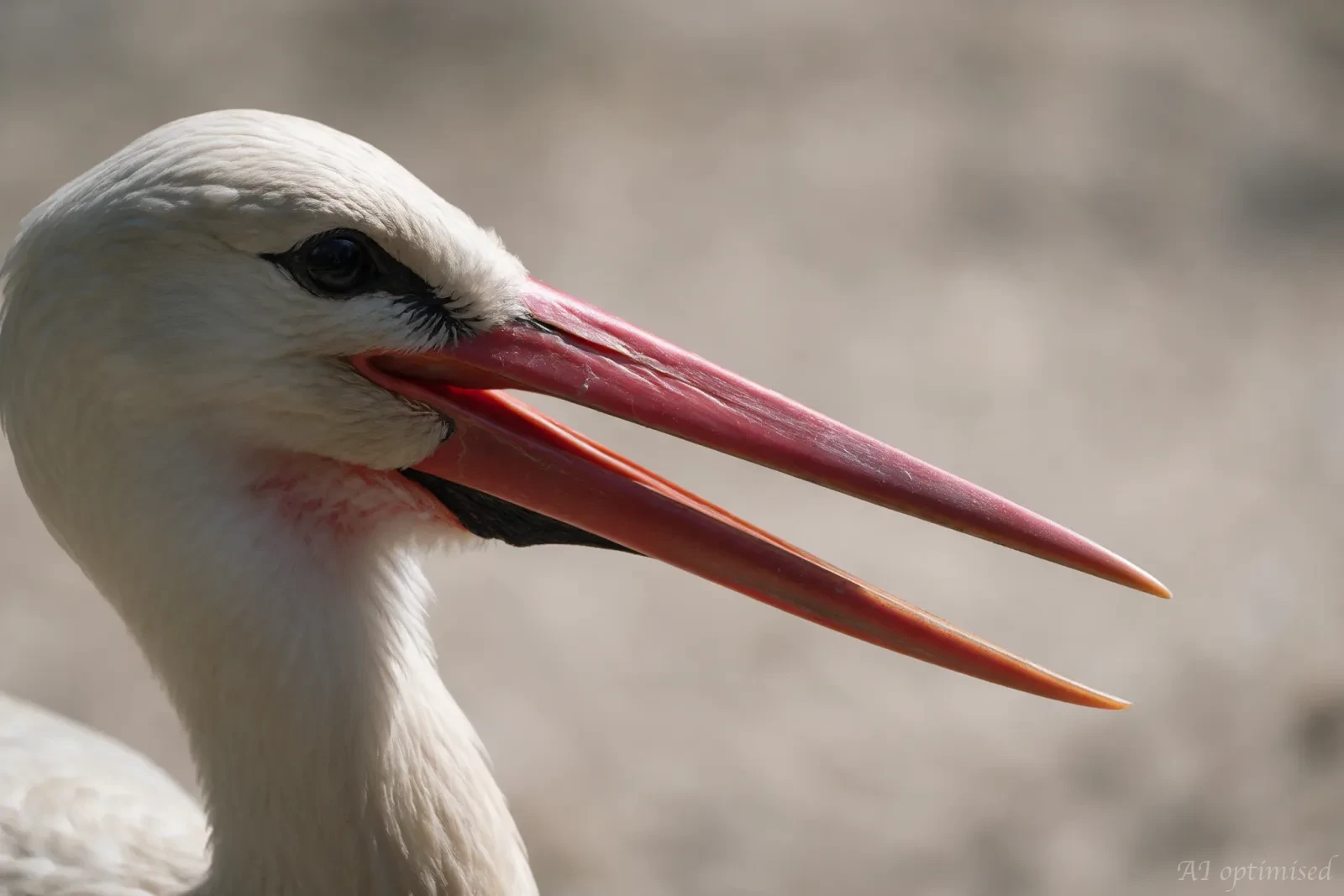
A stork's beak is the first thing most people notice. It is long, straight, and a warm red, and it looks as though it might be a weapon. It is not. The beak of a stork is a tool for catching, built for a quick grab rather than a tear, and its shape tells you a great deal about how the bird lives and eats. Hold the image of that red bill in your mind, and you already know most of what a stork is, because a bird's bill is a map of its whole way of life. It is worth pausing over that bill, because it is one of the simplest and most honest parts of the bird, a shape that has not changed because it has not needed to.
A bill made for grabbing
The stork's bill is long and strong, tapering to a point, with none of the hooked tip you see on a hawk or an eagle. That straight shape is the clue. A bird of prey uses a hooked beak to tear flesh. A stork uses a straight bill to seize and hold. It lowers the bill into shallow water or grass, snaps it shut on a frog or an insect, and swallows the meal whole. There is no tearing, no chewing, no waste of time. The bill is a pair of long forceps, and it closes on its target with a speed the eye can barely follow.
Red and unmistakable
The red of a stork's bill comes through clearly against its white feathers, and it is matched by the red of its legs. That colour serves the bird in the breeding season, when the bill and legs flush brighter and a pair strengthens its bond through the clatter of bill against bill. The red is part of what makes a stork so easy to recognise, and so easy to love from a distance. It is the one bright note on an otherwise pale and black bird, a splash of colour that belongs to the species alone and marks it out against the sky.
The clatter
Because a stork has little or no song, the bill does a second job. A stork can open and close its bill with a fast, rattling motion, producing a dry clatter that carries far across a meadow. This is the stork's voice. Pairs clatter at each other on the nest, heads thrown back, and the sound is a greeting, a warning, and a claim all at once. The same beak that catches a frog in silence becomes a drum when the bird needs to speak. A single tool, put to two very different uses, and the bird moves between them without effort.
Caring for the tool
A bill so important needs care, and storks keep their beaks clean the way any bird keeps its feathers. They wipe the bill against the ground or against a branch after feeding, and they keep the edges sharp enough through ordinary wear. A dull or damaged bill would cost a stork its living, so the bird treats it with the care the tool deserves. For a stork, the beak is both fork and voice, and it cannot afford to let either grow dull, so grooming is as much about the bill as it is about the feathers. A clean, sharp bill is the difference between a full belly and an empty one, and the bird tends it accordingly.
A tool that defines a life
The straight red bill shapes everything else about the stork. It decides what the bird can eat, how it hunts, how it courts, and how it makes itself heard. Change the bill and you change the bird. The long legs and the soaring wings are the stork's way of moving, but the bill is the stork's way of living, and it is the one feature that tells you, at a single glance, what kind of creature you are looking at.
The next time you see a stork, look first at the beak. It is not the beak of a hunter. It is the beak of a patient catcher, a red and gentle instrument, and the same instrument that fills the spring air with its clattering song.
Explore the gift